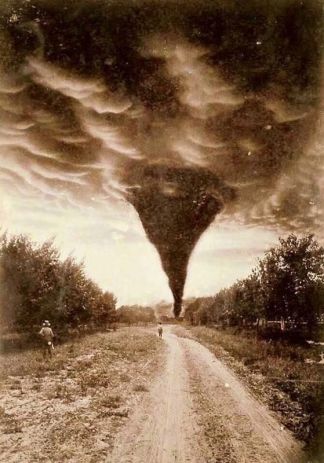
We live in an age when watching our fellow Americans suffer catastrophic loss is an almost daily occurrence. From the wildfires in California, the tornadoes in the mid-west, hurricanes along the eastern seaboard and the gulf coast, floods everywhere, and unprecedented snowfalls, the evening news is a parade of images of people suffering the loss of everything to these disastrous events.
When faced with such tragedies people’s first concern is that their loved ones, including their pets, are safe and accounted for.
Their second concern is not for their houses, their cars or their clothing. Once victims have determined that everyone made it out alive, their next thought is to their memories. If they realize they’ve lost everything, it’s absolutely heart-wrenching to watch their  shock and grief.
We all know that we could be the next victims of Mother Nature.
The work to secure our family archive can be extensive and arduous, and yet, faced with the uncertainty of our age and the global crisis we face, we and our future forbears will be very grateful that all was not loss in the natural disaster your family faced during the Age of Global Warming. Whether you believe the root cause of the changes in our atmosphere is a result of earth’s natural cycles, or you think it’s based on an overload of methane, nitrous oxide and carbon dioxide being pumped into the air through human activity, it isn’t going to make a whole lot of difference when your standing in the shell of the building you once called home with not one picture of your grandparents left anywhere.
 The disaster doesn’t need to be global or far-reaching for everything to be lost. A fire in your home, a burst pipe flooding your basement, a natural gas explosion in your neighborhood, a tree falling in your yard, a roof collapsing from too much snow, the boiler dying in the middle of winter, or a leaky roof are all
personal tragedies that can be just as devastating to our memorabilia as a county-wide disaster.
Beyond a digitization project, you probably have family heirlooms and collectibles that you will want to make sure survive a disaster. I’m not sure everything can be saved, but we should do our best to save as much as we can for as long as we can. Some weather events like hurricane provide us with days of preparation, while others are sudden and unpredictable like earthquakes, tornados and wildfires. In the event of an emergency we  may be lucky to get out with our lives, in which case all our material objects, including our archives, becomes secondary. However, when prioritizing our tasks in the event of an impending disaster, knowing what to do before we are panic-stricken, will help to calm our nerves and focus our attention on what we CAN do in the moment.

 childhood. Parents relish in sharing a favorite tale while children are comforted by the assurance of a parent’s attention. Novels, children’s books, movies, sit-coms, and film are billion-dollar industries. Can we imagine life without storytelling in this form? How much of our time is invested in reading or watching stories come alive in books or movies?
 by ourselves reading a book, we identify with the main protagonist. The character experiences something we have experienced, an awkward romantic moment, an embarrassing job interview, a shameful mistake, or a devastating break-up and we suddenly don’t feel alone.
 doesn’t either. In doing my family’s genealogy and learning about the lives and hardships of my ancestors, I was deeply moved to learn their stories and to know what they went through. Like those on the genealogy shows, we find connections from their lives to ours that are important and relevant to who we are as individuals and families today. Many of the family values passed down to us originate in an ancestor’s story. The value is retained while the story and the ancestor is lost.



 you have storage with that company as well? What retail stores do you have accounts with? Did you use a service ten years ago that still has your data sitting on their server? If and when will the company destroy your content? These are the things that need to be considered
 service, not by us. Each service has different rules of how, when and if content can be accessed by an heir. Our digital footprint can be so vast that we may not be aware how far it extends. Preparing our digital inheritance is another piece in the puzzle that must be in place for all our affairs to be in order. There are some basic things that need to be considered and things to think about and plan for.
 photographs and other materials might be harder to tell apart. Ultimately, our challenge is to organize, store and making available digital documents for periods longer than a human lifetime. When thinking of long-term digital preservation we need consider the different components that comprise digital access.
 100 years. As of today, this hasn’t been tested because they were developed less than 100 years ago. Magnetic tapes have a lifespan of thirty years at best. Flash drives no more than ten years or up to 100,000 erase-re-write cycles. Hard Drives are determined to last no longer than 3-5 years while in active use and possibly up to thirty years in an archival setting. It’s difficult to know how long most mediums will last because the technology is new and hasn’t been tested yet.
 challenging aspect of digital preservation. However, certain file formats provide better options for long-term storage. Programming languages are unlikely to disappear and can be used as alternative mechanisms for long-term preservation.
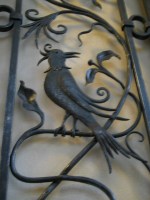 temperatures, artists and craftsmen shape and mold metals into artworks and objects that are both practical and aesthetic. Most metals found in our homes are alloys, which mean they are a mixture of several metals.
 show up as watery or powdery areas on the object.
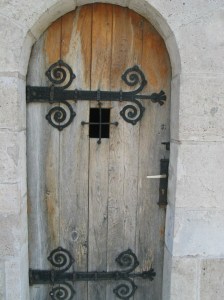 your grandmother’s silver tea set out of the closet every now and take a look at it. Examine your mother’s pewter candelabra. Check the backside of your uncle’s bronze star. Don’t forget that gold piece of your great grandmother’s. Look for tarnishing, rust, discoloration, and flaking. Remedy the situation before it becomes too extreme. Prevention is much less costly than repairing a damaged object. You don’t want to open the drawer containing your ancestor’s Civil War Campaign medal to find it has crumbled back to its original ore state looking simply like a pile of dirt.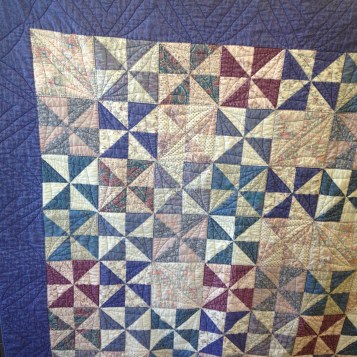
 places. Mold and mildew usually appear as dark blue or black in color and can stain textile materials. Staining can sometimes be removed if it is caught early enough. Often the damage is irreparable. Mold will eat into fabric causing irreversible holes and tears. If you find active mold growth on a textile object the first thing to do is dry it out and put it in an area that has relative humidity below 65%. According to the National Archives, mold cannot grow in environments with relative humidity below 65%.
 homes can contribute to the deterioration of fragile textiles. Sulfur dioxides from automobiles and industrial waste can affect some dyes. Dirt can become embedded in fibers especially with humidity fluctuations, and can stain fabrics. Dirt can also be gritty and razor sharp on a microscopic level, tearing into fibers and weakening them. Harsh cleaning solutions within our homes can also damage delicate fabrics. Never use ammonia or turpentine in the vicinity of fragile textiles.

 linen, cotton and hemp occurred which caused papermakers to look for raw materials that were cheaper and easier to work with. In the 1840s groundwood pulp began to be used. This is a form of wood that has not been cooked or chemically treated, and has a high lignin content and is very acidic.
 By the 1930s it was well known that acid was at the root of the problem causing brittle, browned and yellowed books in large library collections. At this time the search for “permanent paper” began. Permanent paper as defined by preservationists is: “Paper which during long term storage in libraries, archives and other protected environments will undergo little or no change in properties that affect use.”
 If you keep all your processed photographs in one place, the temperature should not exceed 65° and the humidity level should be between 30% to 40%.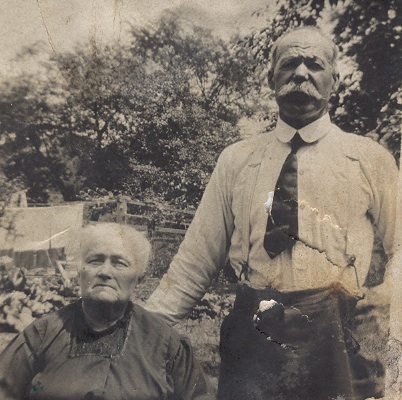
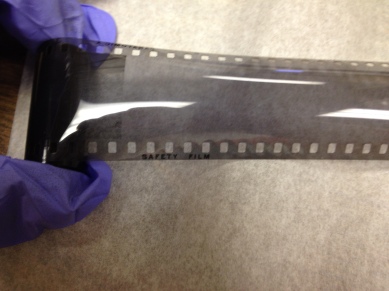 The standard for black and white films is that they should not be stored in a place where the temperature will exceed 70°. That makes them easy to store with your photographs, but the humidity level needs to be lower, between 20% to 30%. Color film has even higher standards with a maximum temperature of 70° with 20% to 30% relative humidity.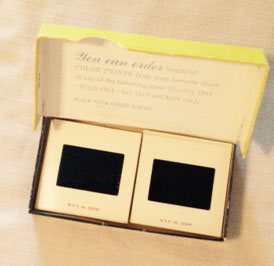
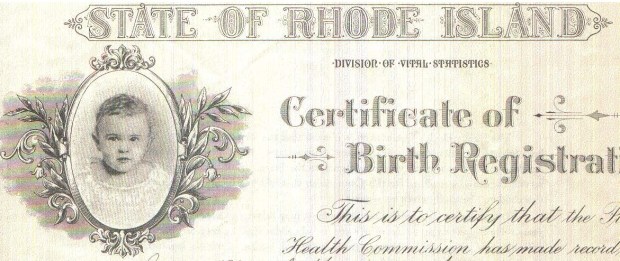
 might be revealing to future generations.
 save all the sympathy cards you received when your father died. Think of what would be of interest to your future forebear.
 author or contain margin notes by the owner. We’ll want to save these documents since the owner took such care in creating them.
 sister belonged to a quilt group for over twenty years. She received recognition for some of her quilts, gave presentations, and participated in the group’s annual events. Retaining some evidence of her participation in this group will show future generations what was important to her, provide evidence of her values, and document how others perceived her and her handicraft.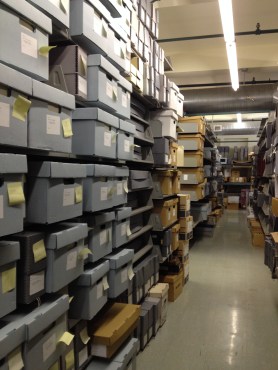
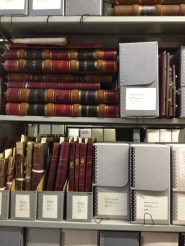 to you. This is exactly the reason many people donate materials to a trusted archive that is better equipped to ensure the article’s long-term survival.
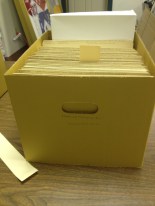 If you own a 19th century doll collection, you might want to give it to an archive that specializes in 19th century dolls. It doesn’t have to go to a place that is that specific, but housing your materials in a place with other like materials will raise the chances that it will be seen by patrons. If you are unsure about where the best place for your materials would be, or don’t want to do the research, make the initial phone call to the archivist. They will set you on the right track. They may know off the top of their heads where they best place for your materials will be.
 LenaSalina Legacy Preservation