People who have attended my Library Lectures are very familiar with Baby2135. I teach it in every lecture.
 Before starting to create a family archive consider who you are creating the archive for. If you are not one of those lucky people who have photographs and letters from a long, lost relative who lived during the Civil War or the American Revolution, it’s probably not on your radar to think very far ahead when considering who you are creating this archive for. You may think of creating it for yourself in the event of a disaster. You may think of creating it for your siblings and cousins who you will share with at the next family gathering. Most people think of their children and grandchildren when they think of preserving their documents. Typically this is as far ahead as most people think.
Instead think of the person in your family who will be born after the last person who  has known you directly has died. Think of your forebear who would think it was cool to have memorabilia from the 20th and 21st centuries. Why do I want you to expand your thinking about who you are leaving your archives to? Because you will tell your story in a very different way; you will describe a letter, a deed, a photograph, a quilt differently. Instead of indicating that a picture is of, “Aunt Mary and her friend, Lou,” you would write instead, “Mary Louise Smith and Lou Johnson. They were a couple for many years, but never married.” If you write for your children you will assume they know who “Aunt Mary” is and that they know that Lou was the boyfriend she never married. The person who is born after the last person who has known you has died, will not know that.
Here’s a formula to help you conceptualize this:
- If you were born in 1945 and live to be 100, you will die in 2045.
- If your great grandchild is ten years old when you died, they would be born in 2035.
- If the great grandchild lives to be 100, they will die in 2135.
- The person that is born in or after 2135 is the person I want you to think about when you preserve your family history. I call that person, Baby 2135.
I know that sounds crazy and an extremely long time into the future. When I think of Baby 2135, it seems so remote and abstract that I think, “Who cares?” When I’m working in the archives and I wonder whether or not I should save something, I always look back and think, “What don’t we have that I wish we did?” or “What do we have, that I’m glad we do.” Asking these questions changes our perspective. With that in mind, let’s apply the formula to our ancestors.
- Say you had a great, great, grandfather who was born in 1800.
- If he lived to be 100, he would have died in 1900.
- His 10 year old great-grandchild would have been born in 1890.
- If the great grandchild lived for 100 years, he would die in 1990.
- The person who was born in 1990 would now be in their twenties.
Doesn’t seem that long ago when you put it that way, huh?
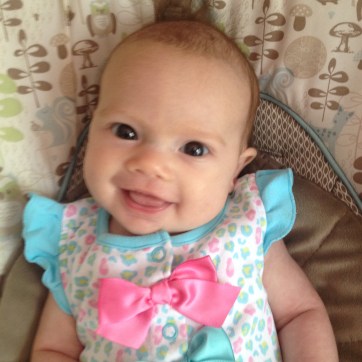
Photographs: Abby Coelho, Edmund Frenier, Sr.
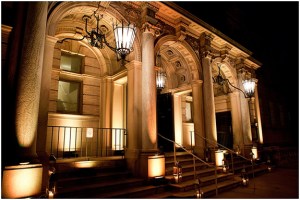 Providence Sunday Magazine about the Providence Public Library. I thought, “How cool would it be to walk into that building everyday to go to work?” When I finally took the leap and went to grad school, I decided to become an archivist instead. I love working with older documents. One of the things I loved when I was new in this field and doing my internships is that when I stumbled upon a cool original document while processing collections, I would immediately tell my supervisors, people who have been working in the field for twenty years or more.
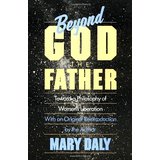 internship at the Sophia Smith Collection at Smith College, I had the honor of doing an initial survey on the papers of Mary Daly. In her collection I found letters from Bella Abzug, Gloria Steinem, and Angela Davis, among others. When I told my supervisor, Maida, she got excited and said, “Let me see.” I thought she would have seen it all by then, having worked in Smith’s archive for over twenty years, but she was impressed and curious and had to see. The women’s whose documents I found might not mean much to you, but I grew up listening to them, reading their words, and learning from them. They’re like rock stars in my world.
 my students found a signed letter by Jacques Derrida, the postmodern philosopher. You would have thought he had won the lottery he was so excited. He had read a number of Derrida’s books and considered him a hero. A few days later when I was surveying another collection, I stumbled upon handwritten thank-you notes
  from Erica Jong, author of Fear of Flying, and Hillary Rodham Clinton. That’s what I love about working in the archives. We get to see and feel the documents of people we love and admire, and more importantly, preserve them so a researcher in the future can experience the same thrill of discovery.
 LenaSalina Legacy Preservation